Are You Telling a Story — or Just Flying Over It?
There was a time when drone footage felt like a revelation. A single aerial shot could instantly elevate content — adding scale, drama, and a cinematic quality that wasn't easily achievable before. That time has passed.
Drones are everywhere now. And because they're everywhere, they're no longer a storytelling tool — they're a default. That shift is quietly degrading the quality of a lot of filmmaking and content creation.
The problem was never the drone. It's the absence of intention behind it.
When the Formula Becomes the Film
Scroll through almost any brand video, ag reel, or social post and you'll recognize the pattern: drone reveal, aerials layered throughout, sweeping flyover to close. It looks good — it always does. But it all starts to feel identical.
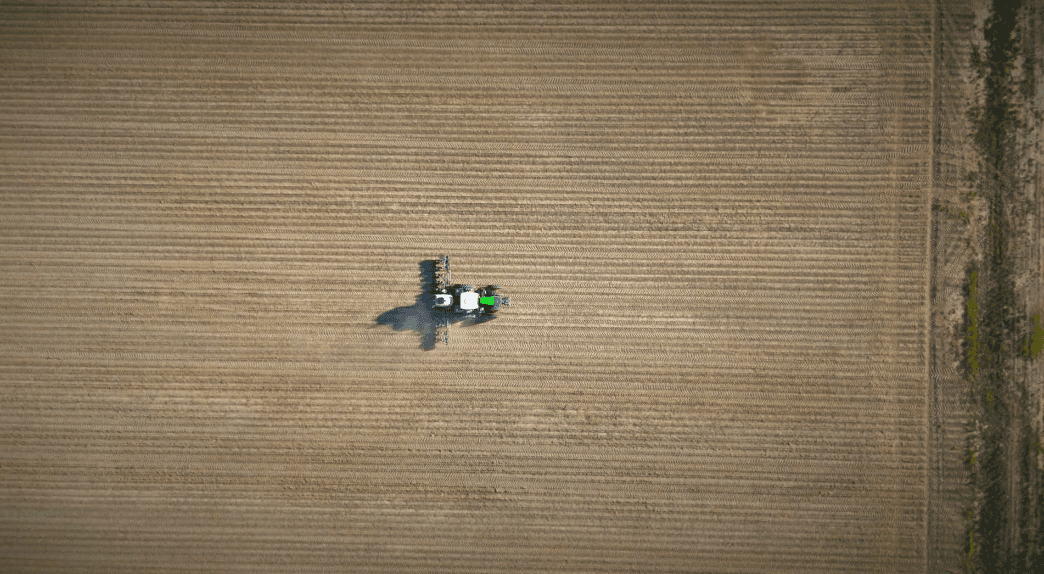
Nowhere is this more obvious than on social media, where feeds overflow with clips of fields, tractors, and sunsets, all cut to the same slow, emotional country track. Different farms. Different creators. Same video.
What began as a creative choice has become a template. And when everyone follows the same template, nothing stands out.
When Every Shot Feels Big, Nothing Does
Drone footage earns its power through contrast. An aerial feels vast and cinematic because it's different from what came before it — something close, intimate, human-scaled. Strip away that contrast and you strip away the impact. When everything is shot from above, nothing feels elevated. The shots that were meant to be the payoff just become the wallpaper.
Aerial Distance Is Emotional Distance
Drone shots pull viewers away from what's actually happening. That's useful when you need to show the scope of a landscape or an operation. It works against you when you're trying to tell a human story.
The most compelling moments in filmmaking happen close — in expressions, small movements, details a drone can't reach. Overreliance on aerials doesn't just flatten the visuals. It severs the connection between the audience and the story.
Ease of Use Isn't a Reason to Use It
Getting a drone shot has never been easier. But the right question isn't can you capture it — it's should you. If a shot doesn't add meaning, context, or emotion, it isn't elevating the content. It's diluting it.
Drone footage still earns its place when it's used with purpose: establishing a location, revealing scale, transitioning between scenes, or capturing something that genuinely can't be seen from the ground. Used sparingly, aerial shots feel earned. They add something new instead of repeating what the audience already absorbed two cuts ago.
Stay Grounded
Strong storytelling isn't about using every tool available — it's about using the right one at the right moment. Sometimes the most powerful decision is to stay on the ground, move closer to your subject, and focus on the details that create real emotional connection.
Viewers don't connect with sweeping aerials. They connect with people and stories that feel true.
Drone shots should enhance a story — not carry it. So start with the story. Then decide if the drone belongs at all.