Here's the blog formatted with clean Markdown for Framer:
After more than 25 years filming in farming and agriculture environments, I can tell you this with absolute certainty: farms are some of the most visually powerful places you can film—and some of the most unforgiving if you're not prepared.
This isn't studio work. This isn't controlled lighting or quiet sets. Agriculture is real life, real people, real work, and real risk. Over the years, I've filmed everywhere from dusty harvest fields to muddy spring planting days, inside tractor cabs, next to grain dryers, and in machine sheds that haven't been quiet since the 1970s.
If you're filming on a farm—whether for branded ag content, documentaries, or grower stories—these are the tips I've learned the hard way.
Respect the Farm Before You Respect the Shot
A farm is not a film set—it's a working operation. One of the fastest ways to lose trust (and access) is to act like your shot matters more than the work being done.
Before I ever roll a camera, I:
Ask where I can safely stand
Learn what machinery will be moving and when
Stay out of the way unless invited closer
When farmers see that you respect their operation, they open up. And that trust shows up on camera every single time.
Natural Light Is Your Best Tool—If You Know How to Use It
Farming environments give you incredible natural light, but you don't get to control it.
After decades of shooting ag content, I plan my shoots around:
Early morning and late afternoon light for texture and depth
Shade from buildings, equipment, or grain bins during harsh midday sun
Cloud movement that can drastically change exposure in seconds
If you're filming interviews, never put a farmer directly into the sun. Side light or open shade makes people look human—not squinty and miserable.
Audio Will Make or Break Your Farm Video
You can fix a lot in post. Bad audio is not one of them.
Farms are loud:
Wind never stops
Diesel engines idle constantly
Grain dryers, fans, livestock, and gravel roads are always competing
I never rely on camera audio. Ever.
Lav mics are mandatory
Directional mics save interviews
I record ambient sound everywhere I go
If the wind kicks up too much, I stop rolling. Waiting five minutes beats trying to salvage unusable sound later.
Dress and Gear Like the Farm Doesn't Care About Your Equipment
Because it doesn't.
After 25 years, I assume:
Dust will get everywhere
Mud will find my boots
Weather will change without warning
I always carry:
Extra lens wipes
Weather-resistant bags
Gear I'm not afraid to get dirty
If you're worried about your equipment getting messy, you're going to miss the shot.
Film the Details—That's Where the Story Lives
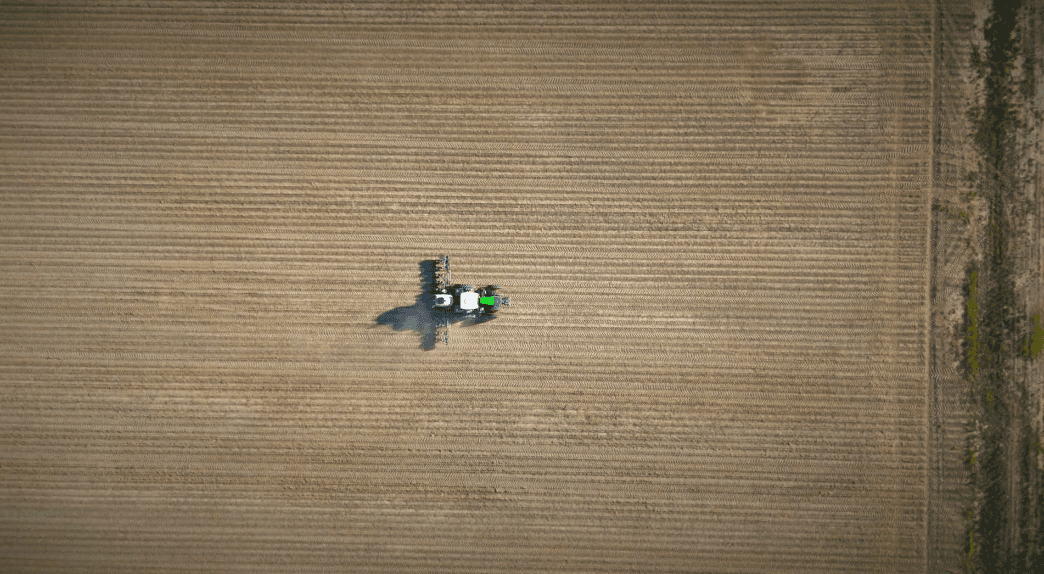
Wide drone shots of fields are great—but they're not the story by themselves.
Some of the most powerful moments I've captured on farms are:
Hands opening seed bags
Soil falling through fingers
Sunlight cutting through dust in a machine shed
Coffee cups riding shotgun in a tractor
These details give your edit authenticity. They make the viewer feel like they're there.
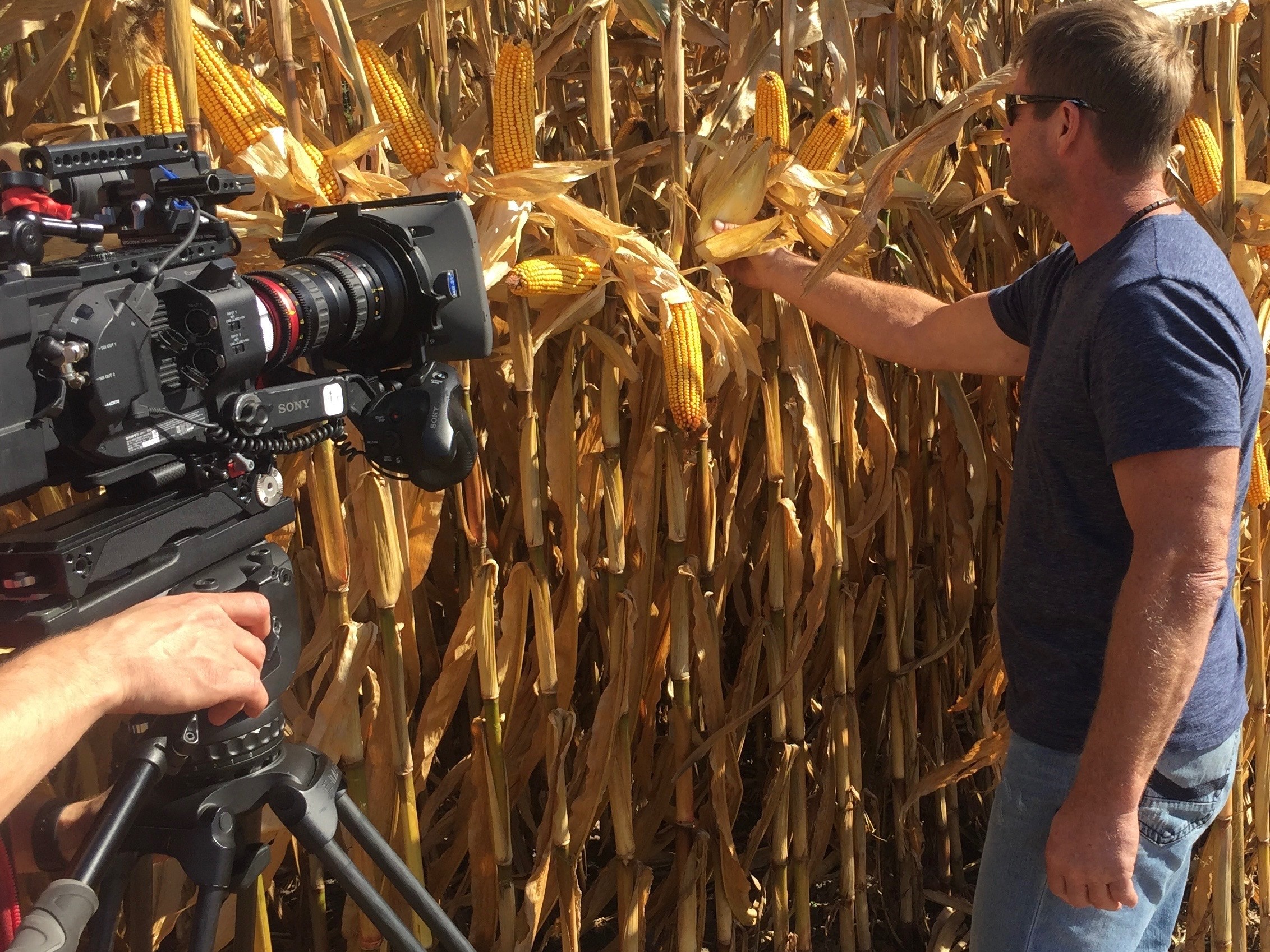
Active Listening Creates the Best Farmer Soundbites
This is the biggest mistake I see newer filmmakers make in agriculture: they're thinking about the next question instead of listening.
When I'm interviewing farmers:
I make eye contact
I react to what they're saying
I remove sunglasses—always
I don't interrupt
Some of the best soundbites I've ever captured came after a pause, when someone finished a thought they didn't plan to say.
Farmers can spot fake interest immediately. Real listening changes everything.
Stay Flexible—Because Farming Never Goes to Plan
Weather shifts. Equipment breaks. Schedules change. Crops don't wait for you.
After decades in ag filming, I've learned to:
Build buffer time into every shoot
Pivot quickly when plans change
Grab B-roll constantly, even when nothing "important" is happening
Flexibility isn't optional in agriculture—it's part of the job.
Safety Is Always More Important Than the Shot
I've filmed around some very big, very dangerous equipment. One rule has never changed:
No shot is worth getting hurt.
I never:
Stand near moving PTOs or machinery
Assume an operator sees me
Push for "just one more angle" if it feels unsafe
Farmers respect crews who understand safety. And once you earn that respect, you'll get better access than any risky move could ever give you.
Final Thoughts: Why I Keep Filming Agriculture
After 25 years, I still believe agriculture is one of the most honest, visually powerful industries to film. If you approach it with respect, patience, and awareness, the stories come naturally.
Farming doesn't need to be staged—it just needs to be understood.